
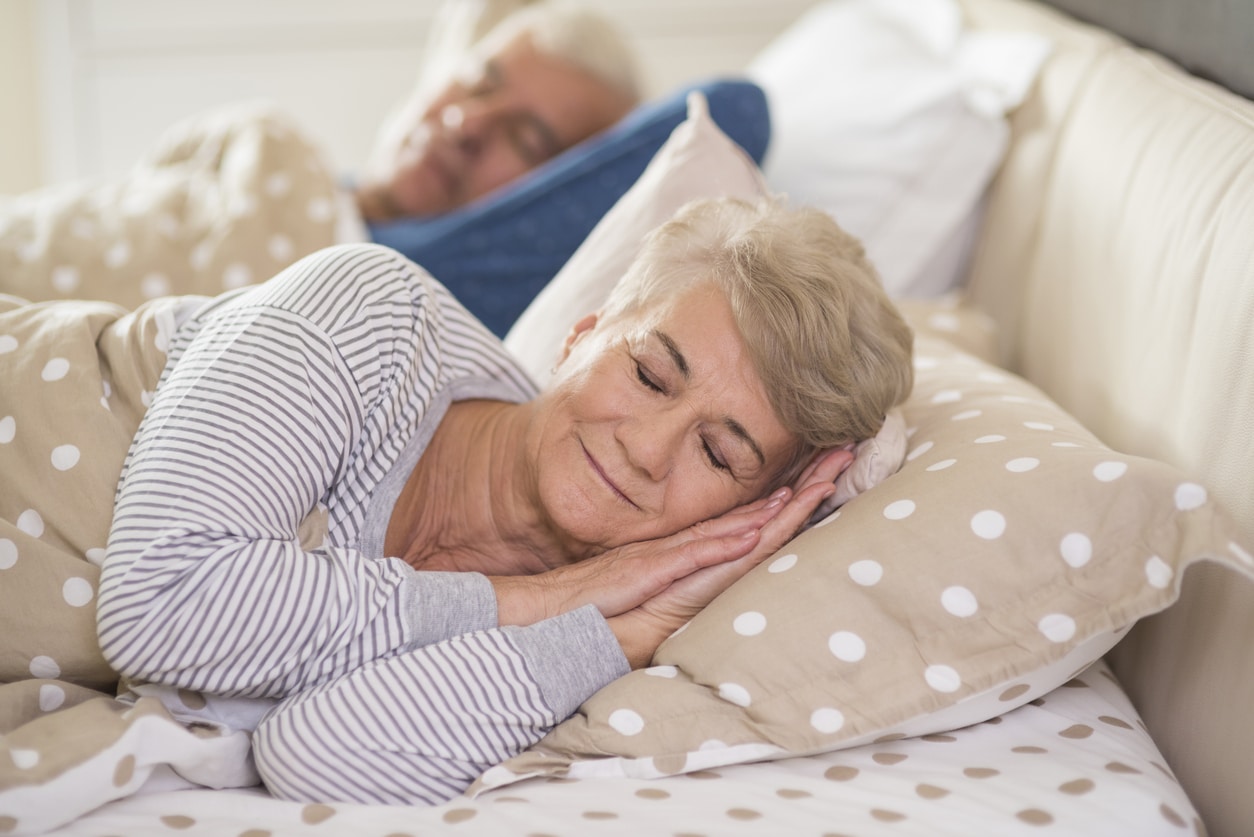
A good night’s sleep can make all the difference in quality of life, but for many older adults, quality sleep is elusive. One 2020 research study notes that changes during aging increase the frequency of nightly awakenings, which decreases the hours and the efficiency of sleep. For some, however, a sleep disorder may be the culprit, so understanding the possibilities and treatments is the first step to sleeping well again.
What is a sleep disorder?
According to the hopkinsmedicine.org article “Primary Sleep Disorders: Dyssomnias” there are two types of sleep disorders: primary and secondary. Primary sleep disorders are not caused by another physical or mental health condition and are categorized as parasomnia sleep disorders, such as sleep walking, or dyssomnia sleep disorders, such as sleep apnea.
Secondary sleep disorders are linked to other mental or physical health problems, which according to the sleepfoundation.org article, “Dyssomnia: Causes, Types, and Symptoms,” can include neurological conditions, incontinence, poor sleep habits, movement disorders like restless leg syndrome, and nocturnal eating syndrome.
Practice good sleep hygiene
One of the best ways to figure out what’s behind poor sleep is to establish a baseline by practicing good sleep hygiene. As noted in the health.clevelandclinic.org article, “Sleep Hygiene: 7 Tips for a Better Bedtime Routine,” this means creating and sticking to a bedtime routine that includes:
- Going to bed and getting up at the same time.
- Spending the hour before bedtime in calming activities and routinely completing steps like bathing and brushing teeth.
- Making the bedroom a sleep haven by removing electronics, blocking light, and keeping the temperature lower (between 60 and 67 degrees).
- Avoiding eating and drinking during the three hours before bedtime, especially caffeine and alcohol, which can negatively impact sleep quality.
- Calming the mind through meditation and/or muscle relaxation.
- Avoiding exercise within two hours of bedtime.
If poor sleep continues despite using good sleep hygiene practices, it’s time to visit a physician for a sleep assessment to determine the cause(s) and treatment options.
Most common sleep disorders
Some problems sleeping can be resolved by simply skipping daytime naps or getting more exercise, while others may require more complex management interventions. Among the most common sleep disorders are:
Insomnia: This condition can be short- or long-term (lasting three or more months). According to the mayoclinic.org article, “Insomnia,” the causes can vary considerably and may include stress, poor sleep hygiene, disrupted circadian rhythm (often due to schedule changes), medicines, medical conditions, and other sleep disorders. The risk of insomnia increases with age and can impact daily life, including physical safety and driving ability. Treatment may include a sleep study, cognitive-behavioral therapy, and prescription or over-the-counter medications.
Sleep-related movement disorders: These include restless leg syndrome (RLS), periodic limb movement disorder (PLMD), nighttime leg cramps, and sleep-related bruxism (teeth grinding), and each can wreak havoc on sleep. As described in the sleepfoundation.org article, “Sleep-Related Movement Disorders,” treatment options may include stress management techniques, iron supplements, medications, massage, and heat/cold application.
Sleep apnea: This serious condition occurs when breathing stops for periods of 10 or more seconds during sleep. Other symptoms include unusually loud snoring, shallow breathing, choking and/or gasping, and restless sleep. According to the webmd.com article, “Sleep Apnea: Everything You Need to Know,” sleep apnea not only disrupts sleep, but left untreated, it may increase the risk of sudden death due to high blood pressure, heart disease, stroke, and/or diabetes.
The two types of sleep apnea are:
- Obstructive sleep apnea, which results from an airway obstruction, and
- Central sleep apnea, which is caused by how the brain controls breathing.
Diagnosis may include a sleep study or polysomnogram, home monitoring, using a continuous positive airway pressure (CPAP) or other breathing device, using oxygen during sleep, wearing an oral appliance to keep the throat open, and medications.
When non-invasive treatments fail, surgery may be an option. The healthline.com article “Surgery for Sleep Apnea” explains the surgical possibilities as well as the risks.
Narcolepsy — although not common, this condition is characterized by sudden periods of deep sleep. As noted in the health.harvard.edu article, “Narcolepsy,” these periods can occur at any time, even when driving, eating, or talking. Symptoms can also include sudden muscle weakness, daytime sleepiness, sleep paralysis, and hypnagogic hallucinations. Although there is no cure for narcolepsy, the primary treatment is a central nervous system stimulant, and management options include scheduled naps and good sleep hygiene.
Living in a safe and secure community like Countryside can also help to improve sleep quality. For more information about Countryside, please call Margaret Nagel at (517) 206-5000 or download our brochure to learn about our care levels, cost, and amenities.