Being proactive about senior health as we age is as easy as being screened for several health conditions. While some screens are routine, others may not be needed until later in life. To best know where your health stands, talk to your physician about these top five health screenings for seniors.
1. Hypertension Screening
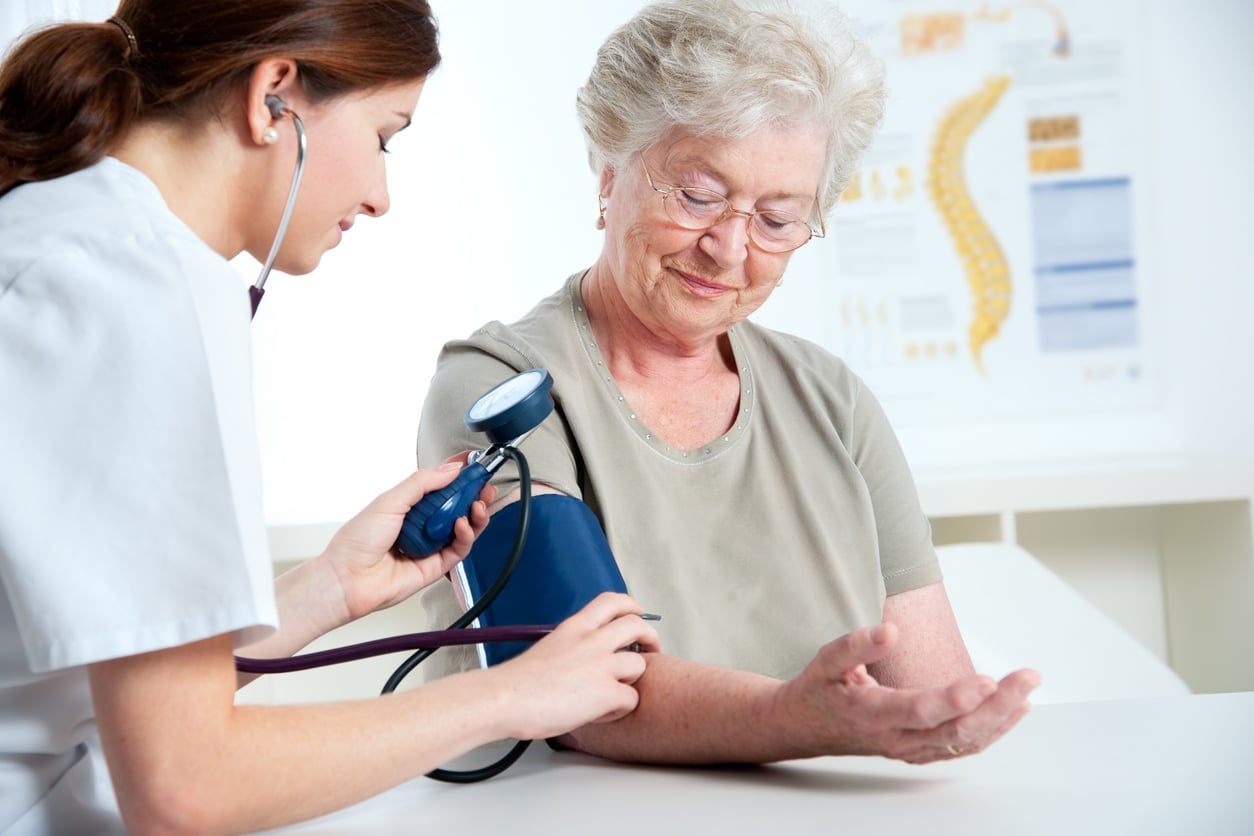
Hypertension (or high blood pressure) is one of the most important screenings for senior health because there are often no symptoms. Hypertension occurs when the force of blood in the arteries increases, making it hard for the heart to pump. The results can include damage to the heart and arteries, as well as heart attack, stroke, and organ damage.
According to the my.clevelandclinic.org article, “Hypertension (High Blood Pressure),” blood pressure is measured by systolic blood pressure (the pressure exerted on artery walls when the heart contracts) and diastolic blood pressure (the pressure exerted when the heart relaxes between beats). Blood pressure is expressed in systolic over diastolic. A systolic number of 130 or higher and/or a diastolic number of 80 or higher is considered high.
Blood pressure should be checked at every appointment to track changes and prescribe treatment and/or lifestyle changes when needed.
2. Type 2 Diabetes Screening
A serious senior health threat, Type 2 diabetes, occurs when the body can no longer use insulin correctly to process glucose.
According to the American Diabetes Association document, “ADA Recommendations: Screening for Diabetes or Prediabetes in Asymptomatic Adults,” in general, screening should begin around age 45, but for those with a family history of diabetes, those with obesity and/or hypertension, and those with other risk factors may require earlier screening.
As noted in the nia.nih.gov article, “Diabetes in Older People,” there are several possible tests for diabetes:
- An A1C test establishes the average glucose level over the past three months.
- A fasting plasma glucose test establishes the glucose level at a single point in time.
- An oral plasma glucose test requires fasting and drinking a sugary drink to establish the glucose level at two points in time.
- A fasting plasma glucose test requires fasting and establishes a glucose level at a single point in time.
Although this senior health threat may not have any symptoms, signs of Type 2 diabetes can include tiredness, unplanned weight loss, frequent urination, increased thirst or hunger, numbness in hands and feet, and slow healing.
3. Cholesterol Screening for Seniors
Another essential senior health screening is for high cholesterol. Cholesterol is required for healthy cell growth, but too much can accumulate on artery walls as plaque, causing them to become clogged. This impedes blood flow and can cause a heart attack or stroke when a piece enters the bloodstream.
While high cholesterol can be inherited, according to the mayoclinic.org article, “High Cholesterol,” this senior health problem is often attributed to a sedentary lifestyle and a high-fat diet. Again, there are often no symptoms, so a simple blood test will establish cholesterol levels and help physicians prescribe the best medication and/or lifestyle changes.
It’s important to note that while screening often begins years before cholesterol is high, the combination of hypertension, diabetes, and high cholesterol contributes to cardiovascular disease later in life.
4. Colorectal Cancer Screening
According to the Centers for Disease Control and Prevention, colorectal cancer is the 4th leading cause of cancer-related death in the U.S., but this senior health concern is easily screened using different tests. As described in the CDC article “Screening for Colorectal Cancer,” they include:
- Stool tests that look for blood and altered DNA.
- A flexible sigmoidoscopy to examine the rectum and lower third of the colon for polyps or cancer.
- CT colonography (or virtual colonoscopy), which uses X-rays to display images of the entire colon on a computer screen.
Screening should begin around age 45 and continue through age 75, and after if needed. Risk factors include family history, genetic syndromes, and inflammatory bowel diseases.
5. Osteoporosis Screening
Osteoporosis is another senior health concern that occurs when aging bones lose mass and become more porous and prone to breaking. As described in the ncoa.org article, “What Is Osteoporosis and How Does It Impact Older Adults?” osteoporosis affects about 54 million people in the U.S., with women four times more likely to develop it than men.
Screening for osteoporosis is done with a bone density test that measures bone mineral content and is fast and painless. Signs of osteoporosis can include lower back pain, a loss of 1 inch or more in height, changes in posture, shortness of breath, or a broken bone after a minor mishap. Risk factors include heredity, poor diet, smoking, and lack of exercise.
Optimum senior health is a priority at Ganton’s Countryside. For more information about Countryside, please call Margaret Nagel at (517) 206-5000 or download our brochure to learn about our care levels, cost, and amenities.